38 where is information about allergens found on labels produced after december 2014
Reading food labels - Food Allergy Education Allergen information on food labels. In Australia the Food Standards Code requires the following common food allergens to be declared on packaged food labels (including imported products): cereals containing gluten and their products, namely, wheat, rye, barley, oats, spelt and their hybridised strains (e.g. triticale) The Food Standards Code ... Allergens - Food labelling The new food labelling legislation identifies food allergens which must be identified on product packaging.
FALCPA identifies eight foods or food groups as the major food allergens. They are milk, eggs, fish (e.g., bass, flounder, cod), Crustacean shellfish (e.g., crab, lobster, shrimp), tree nuts...
Where is information about allergens found on labels produced after december 2014
Food Allergen Labels: Guidance & Free Template Download These are the allergens that need to be labelled on the food products that you produce and/or sell. The 14 allergens that must be declared are: 1. Celery and celeriac. 2. Cereals containing gluten. 3. Crustaceans, for example lobster and prawns. 4. PDF Food allergen labelling and information requirements FSA Food Allergen Labelling and Information Requirements: Technical Guidance - June 2020 . 9 . on food businesses to label PPDS food with a list of ingredients containing emphasised allergens bringing the provision of allergen information in line with labelling for prepacked food, reducing consumer confusion. 18. Allergens and Ingredients Labels - Able2Label The Allergens Report is generated from the ingredients and allergens you indicate when creating your products. The Allergen Store Report is perfect for in-store display or customer information sheets and can be displayed almost anywhere. ENHANCE YOUR BRAND! Call us for more information +353 65 684 4488
Where is information about allergens found on labels produced after december 2014. FDA: Food Allergies, Consumer Protection & Labelling Advice People with food allergies should read labels and avoid the foods they are allergic to. The law requires that food labels identify the food source of all major food allergens used to make the food. This requirement is met if the common or usual name of an ingredient already identifies that allergen's food source name (for example, buttermilk). The 14 Food Allergens | Complete List & Symptoms | Free Allergen Poster Sesame seeds. Sulphur dioxide. Soya. Food businesses in the UK have been required since December 2014 to be aware of 14 prescribed allergens in their food. These are 14 different allergens that need to be pointed out to all customers so that someone with an allergy can make an informed choice of what they can eat. Allergens and labelling The way that nutrition information appears on the label has changed, especially on the front of the pack. Certain key nutrition information may be repeated on a voluntary basis on the 'front... Food Allergens & Food Labels 13-Dec-2014 | GlutenfreeLady.nl This year (2014) on December 13th a new law was established. It is called The EU Food Information for Consumers (Regulation 1169/2011). It is a new European law reorganizing rules on food labeling. There are some good changes introduced with this new law, like:
Allergen labelling for food manufacturers 14 allergens If your product contains any of the main 14 allergens as an ingredient or processing aid, it must be included on the label. The 14 main allergens are: celery cereals containing... PDF Food allergen labelling and information requirements ... - Renfrewshire F. The allergen rules will apply in the UK and the EU from 13 December 2014. The allergen labelling rules for prepacked products will apply to products placed on the market or labelled on or after this date. For non-prepacked foods, the allergen information rules will apply to foods that have been placed on the market on or after 13 December 2014. Allergen Labelling from December 2014 - Positive ID Labels To see the full article about the December 2014 Allergen Labelling Food Changes, please click here. Celery Celery includes the root (Celeriac), leaves, seeds and celery stalks. Celery is found in stock cubes, celery salt, salads, soups and some meat products. The root (Celeriac) contains more allergen than the stalk. Food Allergies | FDA Food allergies occur when the body's immune system reacts to certain proteins in food. Food allergic reactions vary in severity from mild symptoms involving hives and lip swelling to severe,...
List of Allergens for Allergen Labelling Regulations 2014 - Simply-Docs Allergen Regulations List of Allergens for Allergen Labelling Regulations 2014 This page lists the fourteen allergen groups that make up Annex II of the EU Food Information for Consumers Regulation (No. 1169/2011). These allergens are deemed the most common ingredients or processing aids that cause food allergies and intolerances. Precautionary labelling of foods for allergen content: are we ready for ... From December 2014, legislation is being introduced throughout the European Union which will require the mandatory disclosure of allergens in non-pre-packed foods purchased for example from bakeries, butchers, and catering outlets, such as fast-food outlets and delicatessens [ 26 ]. Misleading allergy labelling puts lives at risk - Medical Xpress Misleading allergy labelling puts lives at risk. Failing to declare allergens on food labels is a breach of regulations and can put lives at risk. The law relating to allergen labels was changed ... Label Reading for Food Allergens | Gordon Food Service Because of this law, manufacturers now identify the major food allergens on their ingredient statements through one of two formats: 1. Including the word "Contains" followed by the name of the major food allergen (s). For example, "Contains milk, wheat". OR 2. Including a parenthetical statement in the list of ingredients.
Food labeling issues for severe food allergic patients
Food Allergen Labelling | Laws. Types Of Labels, Effectiveness There are 14 food allergens that you need to be aware of and these ingredients must be clearly marked and declared on any food offered for sale. Nuts (almonds, hazelnuts, walnuts, pecan nuts, sesame, Brazil nuts, pistachio, cashew, Macadamia or Queensland nut). Peanuts. Eggs including egg derived substances such as albumen. Milk and dairy.

Precautionary labelling of foods for allergen content: are we ...
Where is information about allergens found on labels produced after ... Where is information about allergens found on labels produced after December 2014? Wiki User. ∙ 2016-02-02 11:09:47. Add an answer. Want this question answered? Be notified when an answer is posted.
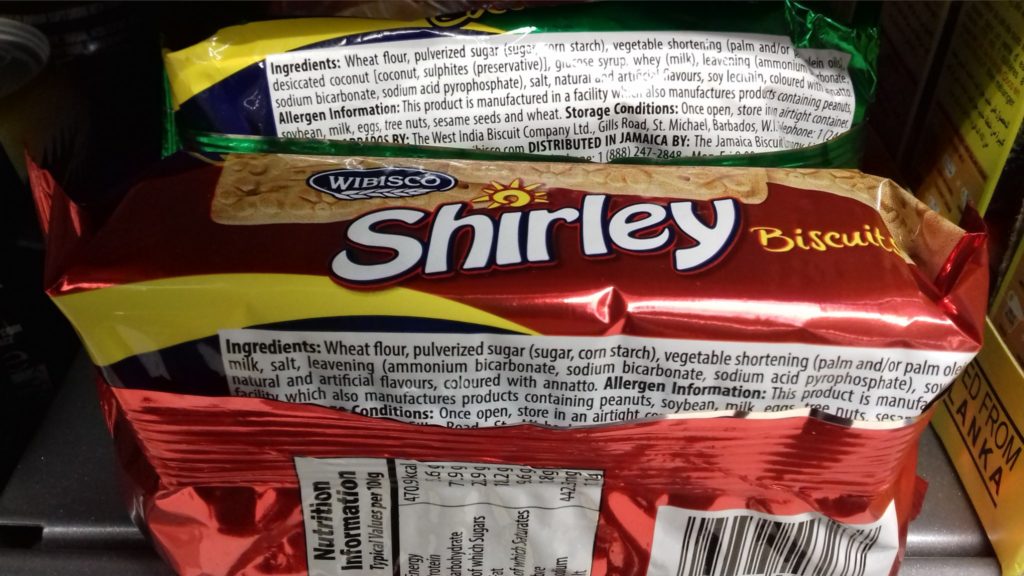
How easy it to report non-compliant food allergen labelling ...
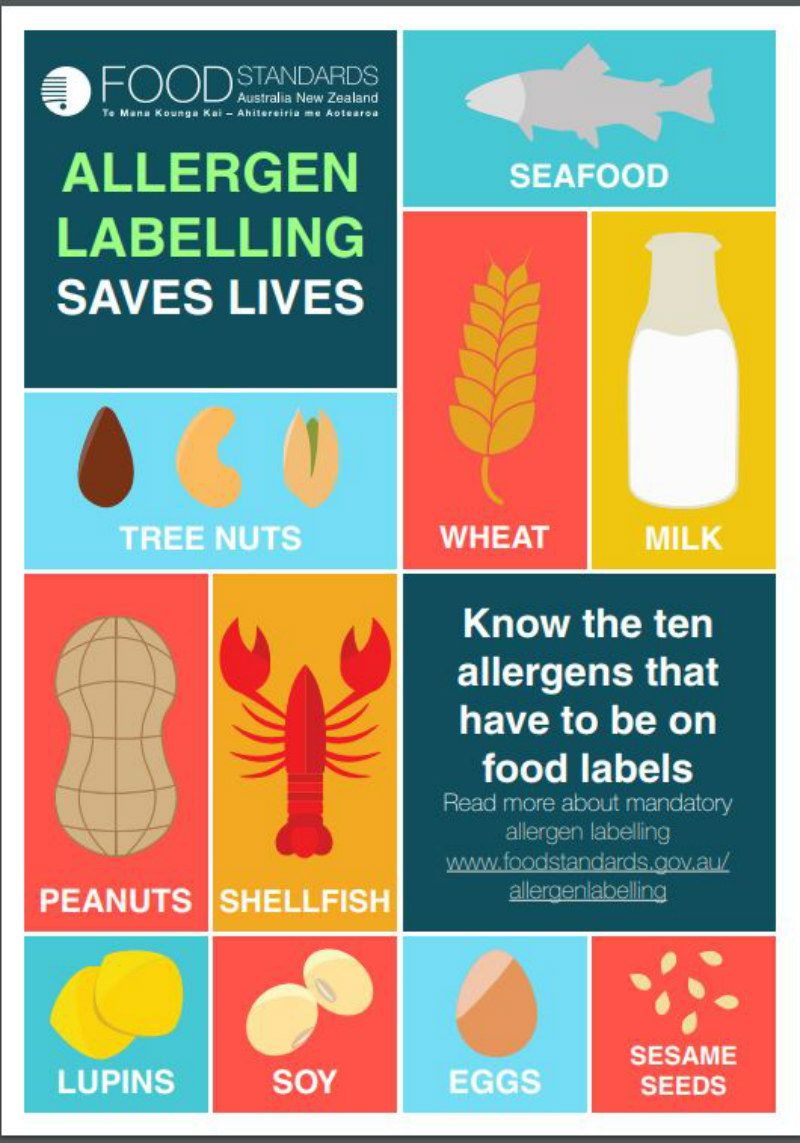
Allergen labelling - Food Standards In February 2021, new plain English allergen labelling requirements were introduced for how certain foods known to be common allergens are declared. These changes will mean food allergen information is clearer and easier to find on food labels. Food businesses have three years to update their labels to meet the new requirements.

We Go Beyond the Label to Bring You Allergen Information You ...
Advice on food allergen labelling This guide will help you choose the right food in shops and restaurants, if you or someone you care for: • has a food allergy or food intolerance.

Alerts | Allergy Alert for Undeclared Soy (Soy Milk) in Vegan ...
Food Allergen Labeling Law Requirements and Exceptions - Verywell Health Peter Dazeley / Photographer's Choice / Getty Images How Allergens Appear on Labels Eight specific food allergens are covered by the law: Milk Eggs Fish (e.g., bass, flounder, and salmon) Shellfish (e.g., crab, lobster, and shrimp) Tree nuts (e.g., pecans and almonds) Peanuts Wheat, and Soybeans
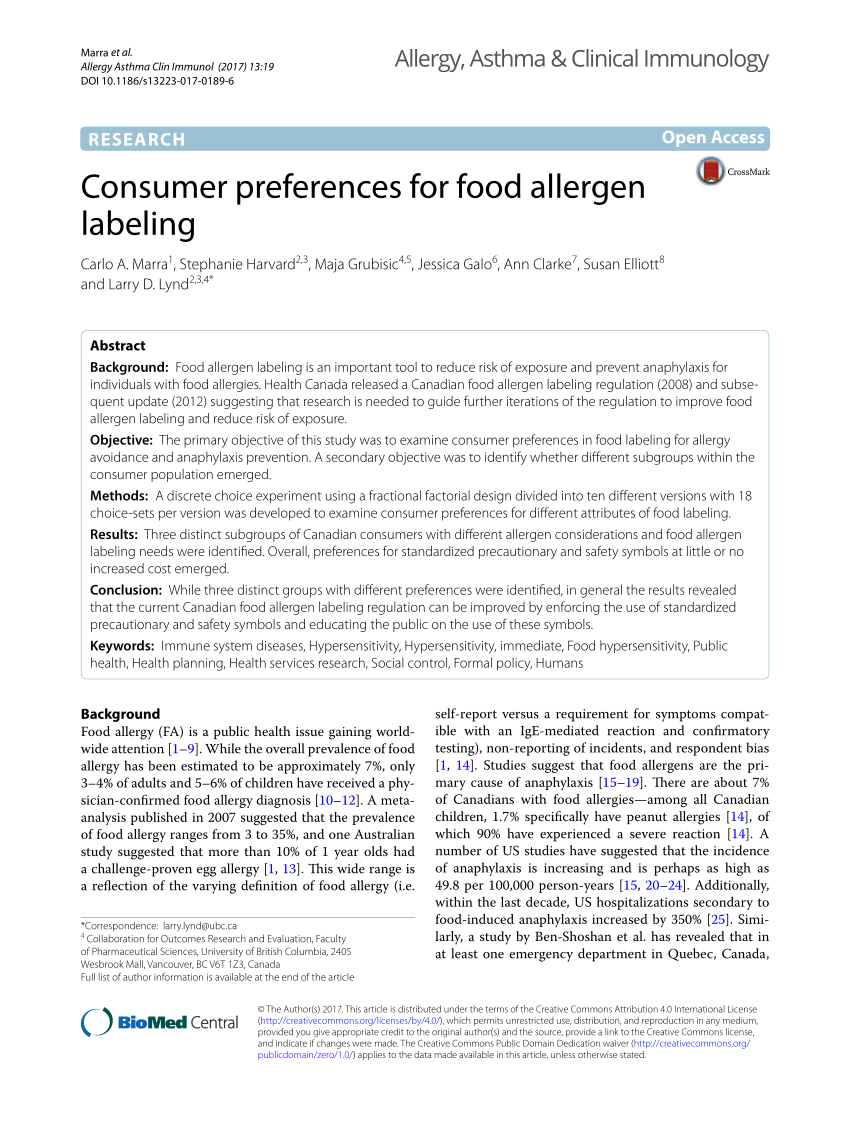
PDF) Consumer preferences for food allergen labeling
allergen information appears on labels - Institution of Occupational ... Morning all From 13th December 2014 the EU Food Information for Consumers Regulations (EU FIC) will change the way allergen information appears on labels and on food that is pre packed, sold loose, or served when eating out. Looking to see if anyone has any information regarding these new regulations and how they will effect remote/offshore ...
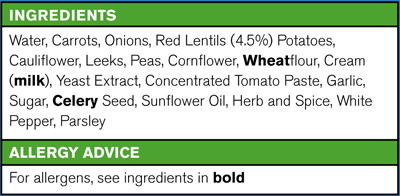
Label: Allergens
Allergy label landmines: a guide to the new food allergen legislation Regulation (EC) No 1169/2011 on Food Information to Consumers also brings some important changes to the way in which the allergen information will appear on packaged foods after December 13th ...

Precautionary labelling of foods for allergen content: are we ...
How to List Allergens on Food Container Labels - National Checking Recognizing the "Big Eight" Food Allergens People in the food industry often refer to the main food allergies as the "big eight." These allergens include milk, eggs, peanuts, tree nuts, fish, shellfish, soy, and wheat. According to Food Safety Magazine, these eight foods account for 90% of allergic reactions related to foods.

Allergen Labelling December 2014 | Food allergies awareness ...
Allergy: what to consider when labelling food How to label allergens . ... producing prepacked foods. It will ... came into force on 13 December. 2014, and are enforced in the four.

New food allergen labeling regulation in Europe – Are you ...
PDF Food allergen labelling and information requirements under the EU Food ... 1169/2011) (EU FIC) and Food Information Regulation (FIR) 2014 (SI 2014/1855) and corresponding Regulations in Wales, Scotland and Northern Ireland. Legal status of guidance 7. These notes have been produced to provide practical guidance about allergen labelling of prepacked food and allergen information provision for non-prepacked foods. 8.
Adverse events and labeling issues related to suspected ...
EU-Food Information to Consumers Regulation - WKO.at From 13 December 2014, all manufacturers of precursor food products (e.g. convenience, spices, etc...) must provide labelling for all main allergens, which also ...

FSA UK – Survey on allergen advisory labeling – FOOD LAW LATEST
Q & A EU Food Information.pdf From 13 December 2014, all food businesses will need to provide ... allergen provisions, national provisions and enforcement details found within.
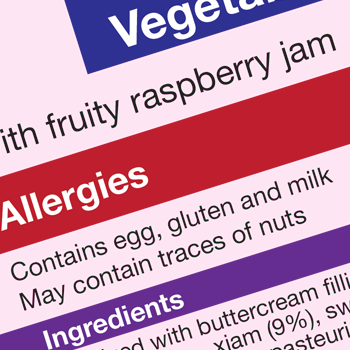
Allergens: Where Food Safety and Labeling Intersect
Allergen Labelling Changes: Are your Labels updated? If any one of the 14 allergens namely Celery, Cereals containing gluten, Crustaceans, Eggs, Fish, Lupin, Milk, Molluscs, Mustard, Peanuts, Sesame, Soybeans, Sulphur dioxide and Sulphites (if they are at a concentration of more than 10 ppm) and Tree nuts are present, these must be explicitly stated on the product label.
Food Allergy Alert: FDA Allows Minor Ingredient Changes to ...
Allergens: Understanding Dairy Product Labels | Food Safety All truly dairy-free products are also naturally lactose-free because lactose is otherwise known as "milk sugar.". As such, lactose is only found in dairy items produced by animals —namely cows, though also sheep and goats—like traditional milk and ice cream. Items labeled as just lactose free, however, might be entirely derived from ...

Food Allergen Labels: Guidance & Free Template Download
Labeling of Allergens: Regulations and Best Practices that Protect the ... In 2004, the Food Allergen Labeling and Consumer Protection Act (FALCPA) created industry standards mandating that the labels on food products prominently display the presence of any ingredient from one of the eight major food allergens—peanuts, eggs, milk and milk by-products, wheat, tree nuts, soy, fish and shellfish.

Thailand New Food Regulation: the Labeling of Prepackaged ...
Allergen Labeling Requirements — FDA Reader Packaged foods for sale in the US which were labeled after January 1st, 2006 must have an allergen statement. This includes single-ingredient packaged foods (i.e. canned tuna) Fresh fruits and vegetables do not require an allergen statement.

Have Food Allergies? Read the Label | FDA
Allergens and Ingredients Labels - Able2Label The Allergens Report is generated from the ingredients and allergens you indicate when creating your products. The Allergen Store Report is perfect for in-store display or customer information sheets and can be displayed almost anywhere. ENHANCE YOUR BRAND! Call us for more information +353 65 684 4488
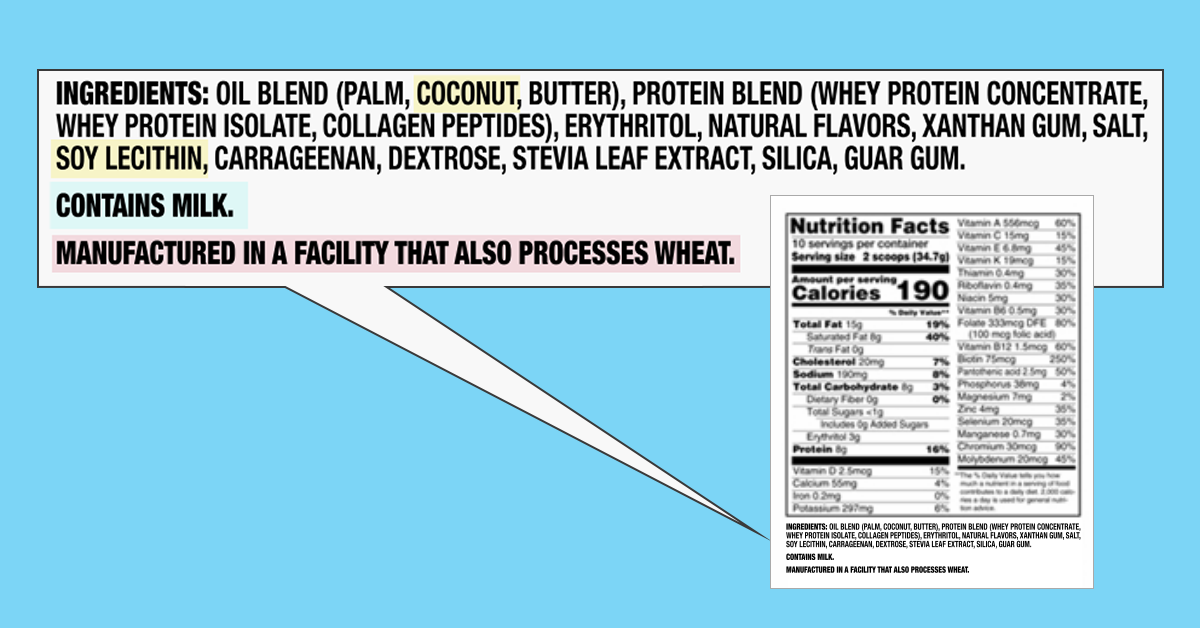
Download the Graphic: What You Need to Know About Allergen ...
PDF Food allergen labelling and information requirements FSA Food Allergen Labelling and Information Requirements: Technical Guidance - June 2020 . 9 . on food businesses to label PPDS food with a list of ingredients containing emphasised allergens bringing the provision of allergen information in line with labelling for prepacked food, reducing consumer confusion. 18.

food labeling — FDA Reader — FDA Reader
Food Allergen Labels: Guidance & Free Template Download These are the allergens that need to be labelled on the food products that you produce and/or sell. The 14 allergens that must be declared are: 1. Celery and celeriac. 2. Cereals containing gluten. 3. Crustaceans, for example lobster and prawns. 4.

food labeling — FDA Reader — FDA Reader

Food Allergy & Anaphylaxis Connection Team | Alerts
Food Laws & Regulations - Thrive Meetings and Events

Food labeling issues for severe food allergic patients ...

Food Allergy Awareness and Action | USDA
EU Food Allergen Labeling – BarTender Support Portal
The Package Label: Food Allergens | Food Safety

Advocacy Update: FDA Moves Forward on Sesame Labeling | Kids ...
Food Allergen Labels: Guidance & Free Template Download

FDA Urged to Require Allergen Labeling for Sesame Seeds ...
Food Labelling | Allergy UK | National Charity
Questions and answers on the EU Food Information for ...

Examples of advisory warnings found on food labels ...

Labeling of Allergens: Regulations and Best Practices that ...
UNDERSTANDING FOOD LABELS

Food Business Africa | Amendment on allergen labelling takes ...
Nutrients | Free Full-Text | The Risk of Undeclared Allergens ...
Allergen information concern: Half of all adverse reactions ...

Which Allergens Are in Your Food? You Can't Always Tell From ...
Post a Comment for "38 where is information about allergens found on labels produced after december 2014"